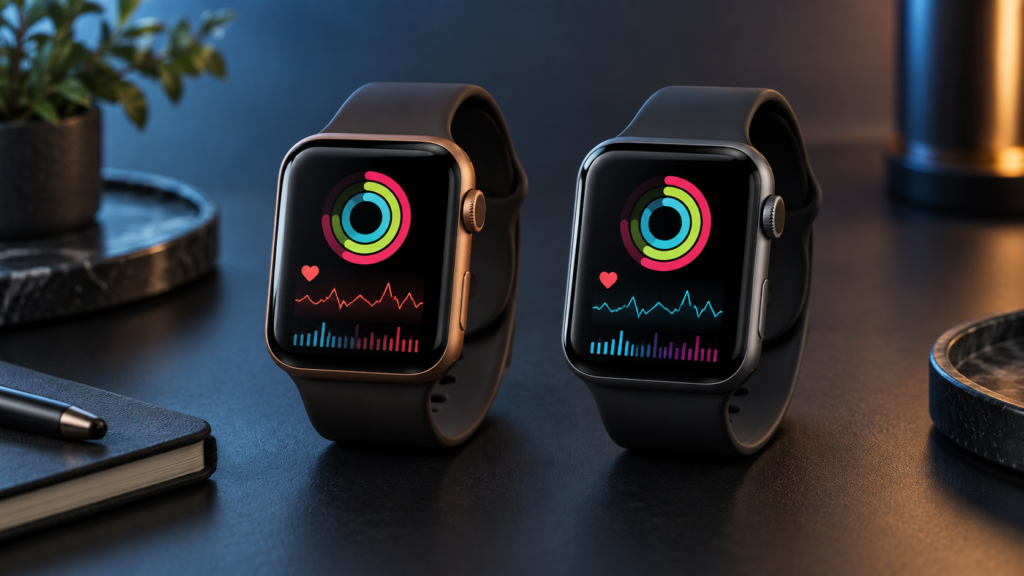
Apple Watch Series 12 vs Series 11 is a more meaningful comparison than the familiar yearly design might suggest. Apple has kept the same practical 42mm and 46mm sizes and the same 24-hour headline battery rating, but it has changed the sensors, chip, charging speed and health insights underneath.
For Australians considering a new Apple Watch — or wondering whether to replace last year’s model — the short answer is simple: Series 12 is the better health and fitness watch, while Series 11 owners who are already satisfied can comfortably wait unless the new readiness and heart-tracking features matter to them.
Apple Watch Series 12 vs Series 11 at a glance
| Feature | Series 12 | Series 11 |
|---|---|---|
| Chip | S11 | S10 |
| Case sizes | 42mm and 46mm; ceramic options differ slightly | 42mm and 46mm |
| Display | Always-On Retina, up to 2,000 nits | Always-On Retina, up to 2,000 nits |
| Normal battery life | Up to 24 hours | Up to 24 hours |
| 15-minute charge | Up to 12 hours of normal use | Up to 8 hours of normal use |
| Outdoor workout battery | Up to 10 hours | Not separately rated by Apple |
| Health highlight | New Health Sensing System, recovery HRV and readiness | Established heart, sleep and temperature features |
Both models support core functions such as ECG, Blood Oxygen where available, temperature sensing, sleep score, sleep apnoea notifications, Fall Detection, Crash Detection and 50-metre water resistance. Health features are wellness tools and do not replace professional medical advice or diagnosis.
The biggest Series 12 upgrade is health sensing
Apple’s new Health Sensing System is the main reason to choose Series 12. According to Apple’s announcement, larger, more power-efficient green LEDs allow background heart-rate measurements every five seconds. Apple says this is 60 times more frequent than Series 11.
Heart-rate variability, or HRV, is also measured as often as every five minutes — up to 24 times more frequently than on Series 11. Series 12 separates recovery HRV from broader HRV trends, giving users a clearer view of how sleep, stress and training may be affecting recovery.
A readiness score you can act on
The additional data powers a new readiness experience. Series 12 analyses recent activity, training load, sleep score and vitals, then returns a score from 0 to 10 with guidance such as Recover, Pace Yourself, Ready or Go For It. The result can change during the day as fresh workout and health data arrives.
S11 chip and new intelligence features
The S11 chip replaces the S10 and powers the faster sensor processing and new intelligence features. Siri AI in watchOS 27 can use broader knowledge and personal context, subject to language, region, device and usage requirements.
Apple has also announced Live Rewind, Siri Recap, faster Shazam and Sound Recognition. Some Audio Intelligence features will arrive in beta later in 2026, and Live Rewind and Siri Recap require a compatible Apple Intelligence iPhone. Do not buy Series 12 solely for a feature that is not yet available in your region.
Battery life is similar, but charging is better
Both watches are rated for up to 24 hours of normal use and 38 hours in Low Power Mode, so Series 12 does not deliver a dramatic multi-day battery upgrade. It does, however, improve the parts of battery performance that active users will notice.
Apple rates Series 12 for up to 10 hours during an outdoor workout, 25% more than the previous model. A 15-minute charge provides up to 12 hours of normal use, compared with up to eight hours on Series 11. Both can reach up to 80% in about 30 minutes.
Faster top-ups are genuinely useful for sleep tracking: charging while showering or getting ready can cover much of the next day without leaving the watch off your wrist overnight.
Design, display and durability
The Apple Watch Series 12 still feels familiar. Aluminium and titanium models retain 42mm and 46mm choices, a 9.7mm depth, an Always-On Retina LTPO3 display and brightness from 1 to 2,000 nits. Existing users should not expect a radically different screen experience.
Aluminium Series 12 models gain Ceramic Shield 2. Apple says it is 60% tougher than the Ion-X glass used on the previous aluminium model. Titanium versions continue to use sapphire crystal, while Series 12 also adds ceramic case options in pearl white and night blue. The new aluminium colours include dark bronze, light gold, black and space grey.
Who should upgrade?
Upgrade from Series 11 if:
- You train regularly and want recovery HRV plus a simple readiness score.
- You value much more frequent background heart-rate measurements.
- Faster 15-minute charging would improve daily sleep tracking.
- You want Audio Intelligence and have a compatible iPhone.
- Your aluminium watch frequently faces knocks and scratches.
Keep Series 11 if:
- You mainly use notifications, Apple Pay and occasional workouts.
- The existing ECG, sleep, temperature and safety tools meet your needs.
- You expected a brighter display, thinner body or multi-day battery life.
- You would rather wait for the late-2026 software features to mature.
Anyone upgrading from Series 9 or older will notice a broader jump. If ruggedness, long adventures and battery endurance matter more than a slim everyday design, also read our Apple Watch Ultra 4 Australia guide.
Compatibility and Australian buying advice
Series 12 requires an iPhone 11 or later — including iPhone SE (2nd generation or later) — running iOS 27 or later. Check Apple’s current Australian store before buying because pricing varies by case material, size, band and cellular option. Also check whether the specific health or intelligence feature you want is available in Australia and in your preferred language.
Series 11 remains a sensible choice when discounted. Compare the actual sale price rather than the generation number: if the saving is modest, Series 12’s improved health sensing and charging justify paying more; if the discount is substantial and you do not need readiness, Series 11 still covers the essentials extremely well.
Final thoughts
In the Apple Watch Series 12 vs Series 11 decision, the new model wins on meaningful health data, recovery guidance, charging convenience and aluminium-glass durability. It is an excellent first Apple Watch and a strong upgrade from older hardware. Series 11 owners, however, should upgrade only if those specific improvements solve a real need.
FAQs
Does Apple Watch Series 12 have better battery life?
Normal use remains rated at up to 24 hours, but Series 12 offers up to 10 hours of outdoor workout use and gains more useful battery from a short 15-minute charge.
Is the display brighter than Series 11?
No. Both reach up to 2,000 nits and use an Always-On Retina wide-angle OLED display with LTPO3.
What is the Series 12 readiness score?
It is a 0-to-10 estimate based on recent activity, training load, sleep and vitals. It provides practical guidance and can update as new data is recorded.
Will my current iPhone work with Series 12?
You need an iPhone 11 or later, including iPhone SE (2nd generation or later), with iOS 27 or newer.
Is Series 12 worth upgrading from Series 11?
It is worthwhile for serious fitness tracking, readiness insights, faster charging or the new intelligence features. For everyday notifications and basic health tracking, Series 11 remains capable.
Leave a Reply